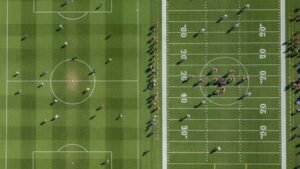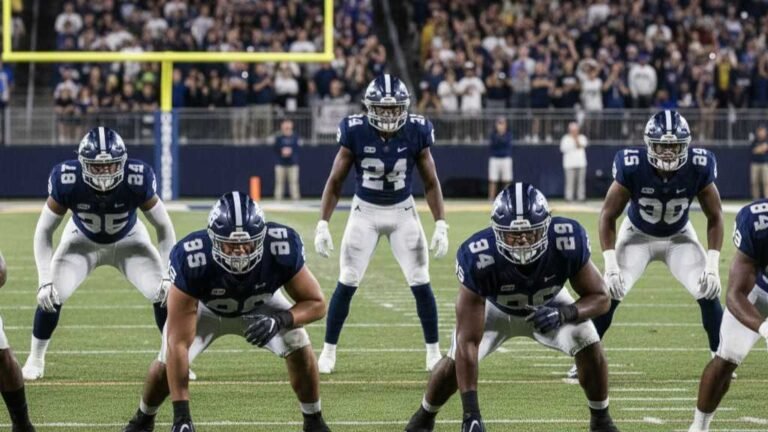

I remember the first time I realized how crucial speed and agility were in football. I was watching my favorite players effortlessly change directions, outmaneuvering defenders with speed that seemed to defy physics. It wasn’t just about being fast; it was about being quick—quick with your decisions, quick on your feet, and quick to react. That’s when I started diving into football speed and agility training, and let me tell you, it’s been a game-changer.
Whether you’re a seasoned pro or just getting into the sport, having sharp speed and agility can make all the difference in your game. Let’s break it down into actionable steps that can help you enhance your quickness and improve your on-field performance.
Why Speed and Agility Matter in Football?

Speed and agility are often underestimated by casual fans or new players, but they’re everything in football. Imagine a receiver sprinting down the field, making a sharp turn, and outrunning the defender. That split-second change of direction? That’s agility. The speed to keep up with a fast opponent or break free from a tackler? That’s speed.
When it comes to football, speed isn’t just about running in a straight line. Agility helps you pivot, sidestep, and respond to changing situations. The best players—whether they’re wide receivers, running backs, or even quarterbacks—are masters of both. So how do you get there?
Football Speed and Agility Training Drills: The Foundation

Let me walk you through some essential drills I use in my own training to improve speed and agility. These are simple but effective exercises that you can incorporate into your routine—no fancy equipment required.
The 4-Corner Drill: Sharp Cuts and Quick Direction Changes
This drill is all about making quick direction changes. To set up, place four cones in a square, each about five yards apart. Start at one cone and backpedal to the next, then shuffle sideways to the third, sprint forward to the fourth, and shuffle back to the start.
Why do I love this drill? It’s a full-body workout. It builds your endurance while training your legs to stay low, helping you change directions without losing momentum. Plus, it mimics the kinds of movements you’ll be doing on the field—whether it’s cutting past a defender or sprinting to a ball.
The T-Drill: Speed and Pivoting in Tight Spaces
If you’ve never tried the T-Drill, trust me, it’s a must. Set up three cones in a line five yards apart, with a fourth cone five yards ahead of the middle cone. Sprint to the middle cone, pivot, and sprint to one outside cone, tap it, then sprint across to the furthest cone, tap it, and return to the middle cone. Finish by sprinting past the middle cone.
The beauty of this drill is that it’s all about efficiency. You’re sprinting, pivoting, and reacting—skills that are essential in football when you need to change direction in a split second.
Shuttle Runs: Get Used to Speed Endurance
Shuttle runs are classic for a reason. It’s one of the best ways to build your stamina while maintaining speed. Set two cones 25 yards apart and sprint from one to the other, touching the cone each time you reach it. Do this for multiple sets, focusing on staying fast and fluid.
I love these because they mimic the short bursts of speed you’ll need in football. Whether you’re chasing down a pass or recovering from a tackle, shuttle runs build that endurance.
Supplement Your Training: Strength and Plyometrics
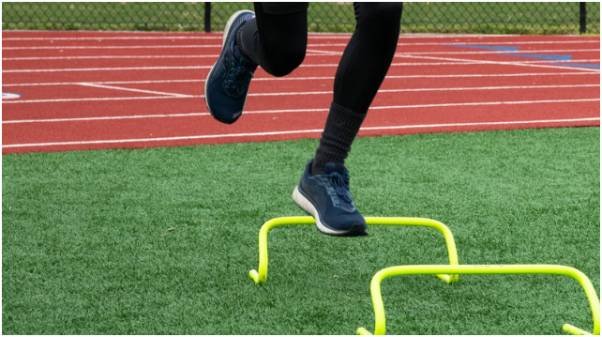
Speed and agility drills are key, but let’s be real: you also need a strong foundation. Strength and plyometric exercises are critical for developing explosive power, and I make sure to include them in my training.
Plyometrics: Power Moves for Explosive Speed
Box jumps, lateral bounds, and hurdle hops—plyometrics focus on your ability to explode off the ground. These drills develop fast-twitch muscles, which are crucial for sprinting and sudden direction changes. Start with something simple like box jumps and work your way up.
When I started doing plyometric drills regularly, I noticed an improvement not only in my speed but also in my power. Plyos train your muscles to react quickly, giving you that burst of energy you need when the game gets intense.
Strength Training: The Building Blocks
I can’t stress enough how important strength training is for football speed and agility. Exercises like squats, lunges, and deadlifts will strengthen your glutes, quads, and hamstrings—muscles that contribute to speed and power. Plus, a strong core helps you stay balanced when you’re making sharp cuts or absorbing contact.
Strength training doesn’t have to be overwhelming. Start with bodyweight exercises like squats and lunges before adding weights as you progress. Trust me, the stronger your legs and core, the faster you’ll be.
How to Improve Your Football Speed and Agility: My Step-by-Step Routine
If you’re looking for a straightforward routine, here’s how I incorporate speed and agility training into my weekly schedule.
Step 1: Warm Up (10-15 minutes)
I always start with a dynamic warm-up to get my muscles ready. I’ll do leg swings, hip rotations, high knees, and butt kicks—just to get the blood flowing.
Step 2: Speed and Agility Drills (20-30 minutes)
I typically rotate through 2-3 drills each session. Some days, it’s the T-Drill and 4-Corner Drill; other times, I’ll mix in shuttle runs or zig-zag sprints.
Step 3: Strength and Plyometrics (20-25 minutes)
After my agility drills, I’ll do some strength training. Typically, it’s 3-4 sets of squats, lunges, and box jumps.
Step 4: Cool Down and Stretch (10 minutes)
Finishing with a good cool-down is crucial to avoid injury. I stretch out my hamstrings, quads, and calves, and do some light foam rolling to release tension in my muscles.
By following this routine 2-3 times a week, I’ve significantly improved my speed and agility.
Here’s a table that breaks down the key drills and their benefits for improving football speed and agility training. It can serve as a handy reference as you plan your workouts!
Quick Reference Table for Training
| Drill | Description | Benefits | Duration/Frequency |
| 4-Corner Drill | A cone drill focusing on backpedaling, lateral shuffling, and sprinting between cones. | Improves lateral movement, cutting ability, and quick direction changes. | 3-4 sets, 30 seconds each |
| T-Drill | Sprinting and pivoting between cones arranged in a T-shape, tapping each cone. | Boosts agility, speed, and reaction time. | 3-4 sets, 30 seconds each |
| Shuttle Runs | Sprinting between two cones placed 25 yards apart, repeating for multiple sets. | Enhances speed endurance and quick change of direction. | 5-10 sets, 20-30 yards each |
| Box Jumps | Jumping onto a box (or a platform) using explosive power. | Builds explosive leg power and overall jumping ability. | 3-4 sets, 8-12 reps each |
| Single-Leg Bounds | Bounding off one leg, alternating legs to cover distance. | Improves single-leg strength, power, and speed. | 3-4 sets, 10-12 reps each leg |
| Hurdle Hops | Jumping over multiple low hurdles in rapid succession. | Enhances reactivity, rhythm, and explosive power in quick bursts. | 3-4 sets, 5-8 reps each |
| Lateral Power Shuffles | Lateral bounding from one foot to the other, absorbing impact and exploding back. | Develops lateral speed and quickness for defensive movements. | 3-4 sets, 10-12 reps each |
| Strength Training (Squats, Deadlifts, Lunges) | Building strength through lower body exercises like squats, deadlifts, and lunges. | Enhances lower body power, stability, and endurance. | 3-4 sets, 8-12 reps each |
How to Use This Table:
- Start small: Begin with lighter, less intense sessions and gradually increase the intensity as you progress.
- Consistency is key: Aim to practice these drills 2-3 times a week for optimal speed and agility gains.
- Mix and match: Combine drills to create a full-body training session that works on both speed and power.
Frequently Asked Questions about Football Speed and Agility Training
1. What’s the best drill to improve my cutting speed in football?
The 4-Corner Drill is perfect for improving your ability to cut. It teaches you how to change direction quickly and stay low while transitioning between movements.
2. How often should I train speed and agility?
I recommend training 2-3 times a week, allowing at least 48 hours of recovery between sessions. Your body needs time to rest and rebuild after intense plyometric and sprint training.
3. Can strength training help with speed and agility?
Absolutely! Stronger muscles, especially in your legs and core, will help you accelerate faster and maintain balance during agility drills. I combine strength exercises with my speed drills for optimal results.
4. How do I avoid injury during speed and agility training?
Focus on your form. Make sure you’re landing softly, using proper technique, and gradually increasing the intensity of your training. Always warm up and cool down to keep your muscles flexible and ready to perform.
Speed, Agility, and All the In-Between
So, there you have it—my tried-and-true football speed and agility training routine. The key is consistency. Keep training hard, push yourself, and remember that improvement comes over time.
Trust me, when you start to see those results—whether it’s faster sprints, quicker cuts, or stronger tackles—it’s all worth it. Keep your eyes on the prize and go dominate that field!