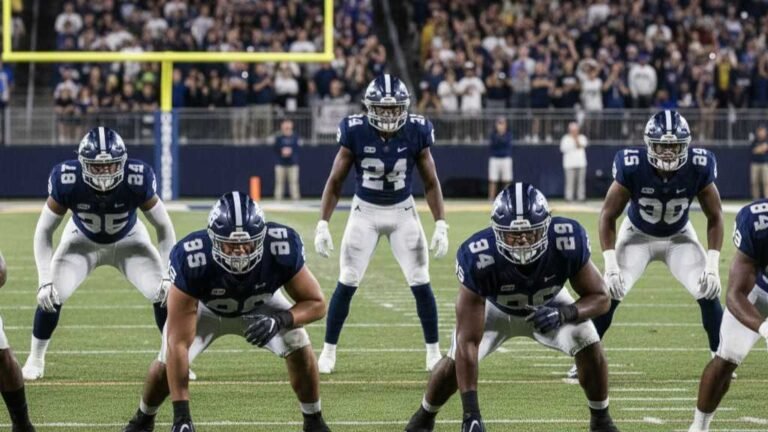
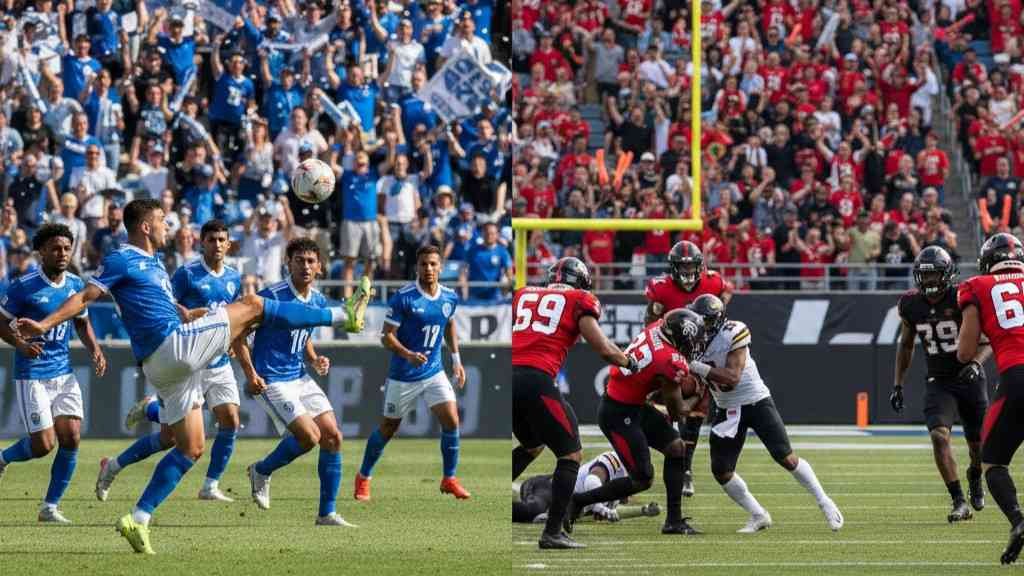
Let me take you back to the time when I was confused about soccer vs football. Having grown up in a family that only watched American football, I didn’t understand the hype around soccer. I’d hear people talking about this “football” game and thought, “Why are we still calling it football when it’s all about kicking the ball?”
Then, I found myself at a soccer match, surrounded by passionate fans chanting and cheering. The energy was electric, and it hit me—there’s so much more to the game than I initially thought. Now, I’m here to break down the differences between soccer vs football and explore why these two games—despite sharing a name—are worlds apart.
What Is the Difference Between Soccer and Football?
When it comes to the soccer vs football debate, the differences aren’t just in terminology—they’re also in gameplay, equipment, and global reach. First things first, soccer (or association football) is played primarily with the feet, whereas American football is all about using the hands to carry and throw the ball.
While the football field is marked by tactical pauses and specialized units, soccer players move the ball with quick, continuous play. But it’s more than just the name or the ball shape that sets these sports apart—each sport has its own unique set of rules, fan culture, and worldwide popularity.
How Are Soccer and Football Played Differently?
The key difference between soccer vs football is how players interact with the ball. In soccer, players use their feet, and only the goalkeeper is allowed to use their hands. The game involves quick, uninterrupted play that lasts for 45 minutes each half. The objective is simple: score goals by getting the ball into the opponent’s net.
In contrast, football is a game of strategic breaks. Played over four 15-minute quarters, American football involves a lot of time spent stopping and starting between plays. Players use their hands to throw, catch, and carry the ball, and the action is generally divided into offense, defense, and special teams. It’s a much more tactical sport, with each play designed to move the ball in short bursts, often through a series of passes or runs.
Soccer vs Football: Comparing the Field, Equipment, and Players
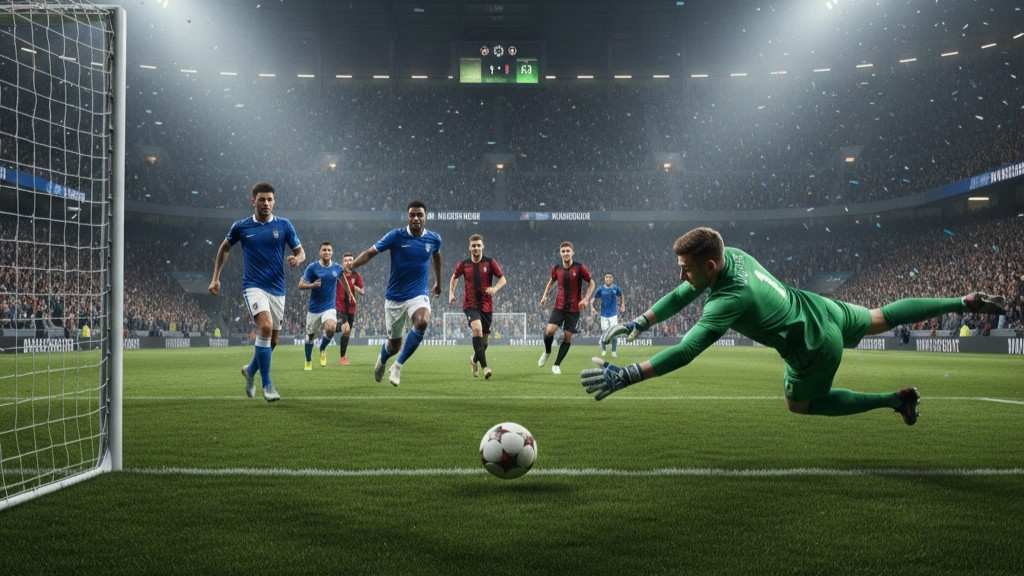
One of the most noticeable differences between soccer vs football is the size and layout of the field. A soccer field is typically wider and slightly longer than a football field. The soccer pitch’s dimensions can vary, but it is generally around 100 yards long, with flexible width depending on FIFA rules. The goal is a massive open area, allowing plenty of space for players to move around and score.
On the other hand, American football fields are 100 yards long with two 10-yard end zones. The field is much narrower, emphasizing precision and tactical movement. As for the equipment, soccer players wear minimal gear—just shin guards and specialized shoes. Football players, however, are decked out in helmets, shoulder pads, and a variety of protective gear due to the high-contact nature of the sport.
In terms of player roles, soccer has 11 players on the field at once, and substitutions are limited. These players must have the stamina to run non-stop for 90 minutes. Meanwhile, football has specialized units for offense, defense, and special teams, with frequent substitutions throughout the game. This results in a more rotational style of play.
Soccer vs Football: The Rules, Scoring, and Popularity
| Aspect | Soccer | Football |
| Scoring Method | Goals are scored when the ball crosses the goal line inside the net. | Touchdowns are worth 6 points, field goals are worth 3 points. |
| Points per Score | 1 point per goal | 6 points for a touchdown, 3 points for a field goal, extra points and safeties add more. |
| Game Flow | Continuous play with minimal stoppages. Goals can come rapidly. | Stop-and-start action with frequent pauses after each play. |
| Tie Games | Games can end in ties (draws). | Overtime is used to break ties. |
| Focus and Intensity | Players need to maintain focus for long stretches of time. |
Each play carries significant weight and strategic importance. |
How to Enjoy Both Soccer and Football Like a Pro
So now that we know the soccer vs football differences, how can you get involved with both sports and enjoy them to the fullest? Here’s how to dive in:
Step 1: Start with the Basics
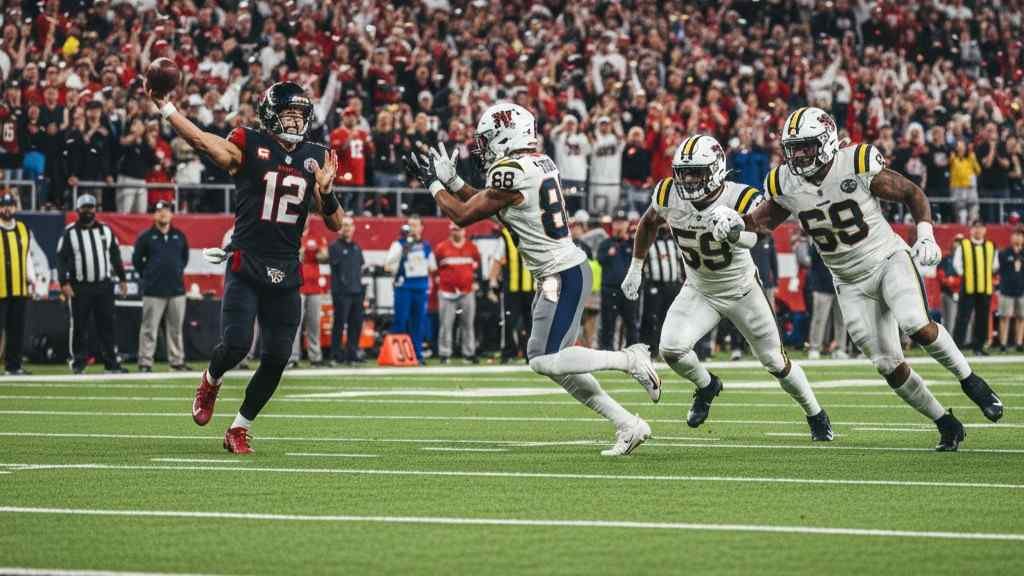
Whether you’re attending your first game or watching from home, it’s helpful to learn the rules of both sports. For soccer, familiarize yourself with the offside rule and key positions like forwards, midfielders, and defenders. For football, get to know the roles of defense positions like the quarterback, wide receiver, and linebacker.
Step 2: Feel the Energy of the Fans
One of the best ways to understand both sports is by immersing yourself in the fan culture. Soccer fans are passionate, often seen singing chants and supporting their teams in massive groups. On the flip side, American football fans are known for their tailgating, fantasy leagues, and pre-game rituals. Experiencing the live atmosphere of both games is a surefire way to get hooked.
Step 3: Embrace the Language
Each sport has its own lingo. In soccer, “GOAL!” echoes through the stadium whenever a player nets the ball. In football, you’ll hear “First down!”, “Touchdown!”, and “Field goal!” To feel part of the action, learn the terms, and soon you’ll be yelling right along with the crowd!
Frequently Asked Questions
1. Which Game Is More Popular: Soccer or Football?
It really depends on where you are in the world! Soccer is the global favorite, with billions of fans across continents, especially in Europe, Africa, and South America. In the U.S., American football dominates, with the NFL being the top sports league. While soccer’s influence continues to grow in North America, American football remains firmly entrenched in the culture.
2. Why Is American Football Called ‘Football’ If They Don’t Use Their Feet?
Great question! The term “football” comes from the historical roots of the game, which originally involved kicking the ball. While modern American football focuses on hands, the name stuck. In the U.S., soccer was coined as a way to distinguish the game from the already-established version of football.
3. Which Sport is More Dangerous: Soccer or Football?
Both sports carry their risks. Football has higher risks due to its physical collisions, often resulting in concussions or broken bones. Soccer, while less violent, still has risks of collisions, muscle strains, and knee injuries. Both require proper gear and awareness to minimize risks.
So, Which One Is Better—Soccer vs Football?
When it comes to soccer vs football, there’s no clear winner—it all depends on what you enjoy. Both sports offer adrenaline-pumping action, incredible athleticism, and dedicated fanbases. Whether you’re kicking a ball around the pitch or watching a hard-hitting play unfold on the field, both sports have something magical to offer.
My advice? If you haven’t experienced both yet, give them a try! Grab some friends, hit up a local match or game, and you’ll quickly find which sport makes your heart race. At the end of the day, it’s all about enjoying the game and being part of something bigger than yourself.